Research
My research integrates computational structural biology, molecular dynamics simulations, protein language models, quantum chemistry, bioinformatics, and AI-driven molecular design to understand how proteins, peptides, membranes, solvents, and ligands interact across molecular scales. A central goal of my work is to connect sequence, structure, dynamics, and function in biomolecular systems. My research spans AI-guided peptide prediction, allergen and bioactivity modeling, peptide–membrane biophysics, protein structure–function relationships, non-covalent interaction chemistry, molecular informatics platforms, and computational drug discovery.
Research themes
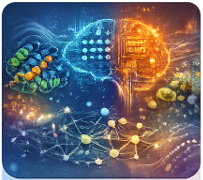
AI-guided peptide, protein, and allergen prediction
Protein language models, deep learning, graph learning, and reproducible AI protocols for biomolecular sequence-function prediction.
Objective: To develop interpretable and reproducible AI frameworks that connect protein or peptide sequence information with biological function, including cell penetration, bioactivity, allergenicity, and peptide delivery potential.
- pLM4CPPs: Developed a protein language model-based framework for cell-penetrating peptide prediction using pretrained sequence embeddings and deep learning.
- pLM4G-CPPs: Extending the cell-penetrating peptide prediction toward graph-learning models that combine residue-level protein language model embeddings with structure-informed representations.
- Developed a reproducible pLM4Alg protocol for allergenic protein and peptide prediction and UniDL4BioPep protocol for predicting 18 different bioactivities, including anticancer, antimicrobial, and anti-blood-brain barrier using ESM2 embeddings, CNN-based classifiers, hyperparameter optimization, and deployable workflows in Google Colab and GitHub.
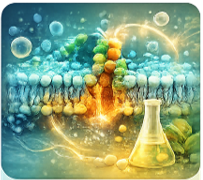
Membrane-active peptides and membrane biophysics
Molecular mechanisms of peptide selectivity, membrane binding, insertion, pore formation, and lipid-dependent activity.
Objective: To reveal how membrane-active peptides recognize and disrupt biological membranes, and to identify molecular features that control membrane selectivity, insertion, pore formation, and biological activity.
- Revealed membrane selectivity mechanisms of Antimicrobial Peptide against prokaryotic and eukaryotic membrane models using atomistic molecular dynamics simulations.
- Investigating concentration-dependent melittin-induced pore formation to understand how peptide loading, membrane charge, and lipid composition regulate pore stability and leakage.
- Studying lipid heterogeneity, membrane packing, charge distribution, and nanodomain organization to understand peptide binding, insertion, and selectivity.
- Applying multiscale simulations to connect atomistic peptide–lipid recognition with mesoscale membrane disruption.
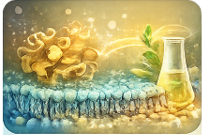
Protein structure, dynamics, molecular interactions, and functionality
Investigating how sequence, structure, environment, and molecular interactions govern protein stability, dynamics, functionality, membrane activity, and biomolecular behavior across biological and food systems.
Objective: To understand how diverse proteins respond to their molecular environment and how changes in solvent, pressure, temperature, membrane interfaces, digestion, and processing conditions reshape protein dynamics, interactions, stability, and function.
- Investigating protein structure–function relationships using molecular dynamics simulations, AI-driven modeling, and multiscale computational approaches.
- Performed atomistic simulations of food, plant, animal, viral, antifreeze, and membrane-active proteins to study conformational dynamics, aggregation behavior, molecular recognition, and functional changes.
- Studied protein allergenicity, digestibility, and processing-induced structural modifications in systems such as ovalbumin and food proteins under high hydrostatic pressure, ultrasound, digestion, and mixed solvent conditions.
- Performed simulations of α-gliadin and solvent-dependent protein systems to investigate ethanol–water effects on flexibility, aggregation propensity, structural exposure, and functionality.
- Applying computational approaches to study protein–protein, protein–solvent, protein–membrane, and protein–ligand interactions relevant to food systems, drug discovery, biomolecular recognition, and therapeutic design.
Non-covalent interactions and quantum chemistry
Fundamental molecular understanding of weak interactions that govern recognition, assembly, stability, and selectivity.
Objective: To quantify and interpret the weak interactions that control molecular recognition, binding, self-assembly, protein stability, ligand association, and supramolecular organization using quantum chemistry and molecular modeling.
- Developed quantum mechanical insights into non-covalent bond characterization, including electrostatics, dispersion, induction, polarization, and charge redistribution.
- Studied cation–π, aromatic–aromatic, hydrophobic, ion–water, host–guest, and pyrene functionalization interactions to understand molecular recognition.
- Applied first-principles calculations to ion microsolvation and transition-metal ion interactions to understand competition between ion solvation and water-splitting behavior.
- Using non-covalent interaction principles to inform protein design, biomolecular recognition, supramolecular chemistry, and computational drug discovery.
Computational drug discovery and molecular informatics platforms
Molecular databases, chemical-space exploration, fragment libraries, and structure-based discovery workflows.
Objective: To build and apply curated molecular databases, interaction resources, and informatics platforms that enable chemical-space exploration, structure-based discovery, molecular interaction analysis, and data-driven therapeutic design.
- Contributed to the development of Molecular Property Diagnostic Suite drug discovery portal, enhancing its chemical space exploration capabilities for fragment and compound library modules.
- Contributed to the development of Aromatic-Aromatic Interaction and Cation–Aromatic Interaction Databases for systematic analysis of these non-covalent interactions in proteins.
- Applied docking, molecular modeling, virtual screening, drug repurposing, and cheminformatics workflows to herbicide discovery, infectious disease targets, host–guest complexes, and interaction analysis.
- Interested in building open, reproducible molecular informatics resources that connect structural biology, chemical-space analysis, and AI-assisted discovery.

Selected ongoing projects
pLM4G-CPPs: Graph-based learning for cell-penetrating peptides
This project extends pLM4CPPs by representing peptides through protein language model embeddings and graph-learning architectures. The goal is to improve CPP classification, enhance external dataset generalization, and identify sequence or residue-level features associated with cellular uptake.
Methods: ESM/ProtT5 embeddings, graph neural networks, CNNs, external validation, benchmarking against CPP predictors.
pLM4Alg: Protein language model protocol framework for allergen prediction
This work presents a reproducible protocol for predicting allergenic proteins and peptides using pretrained protein language models and deep learning. The workflow includes dataset preparation, sequence cleaning, ESM2 embedding generation, CNN model training, hyperparameter optimization, evaluation, and deployment for new protein or peptide datasets.
Methods: ESM2 embeddings, CNN classifiers, protein sequence representation learning, Google Colab workflows, and GitHub-based reproducible protocol development. GitHub repository
Melittin-induced pore formation in complex membranes
This work investigates how melittin concentration and membrane composition regulate pore formation, membrane thinning, peptide insertion, and water penetration in eukaryotic and prokaryotic membrane models.
Methods: all-atom MD, coarse-grained MD, free-energy analysis, contact maps, density profiles, water-defect analysis.
Ice-binding proteins and ice–water interfaces
This project examines how wild-type and engineered ice-binding proteins recognize ice surfaces, stabilize ice–water interfaces, and modulate ice growth behavior relevant to cryoprotection and frozen food systems.
Methods: TIP4P/ICE water model, ice–water interface simulations, order parameters, hydrogen-bond analysis, binding-interface mapping.
Food protein functionality from atoms to applications
This research connects simulations of gluten proteins, ovalbumin, plant proteins, and process-induced structural changes with experimental readouts such as rheology, allergenicity, digestion stability, NIR spectroscopy, and baking performance.
Methods: long-timescale MD, coarse-grained simulations, PCA/FEL, contact networks, NIR/ML integration, food protein experiments.
Methods & tools
Molecular modeling and simulation
- All-atom and coarse-grained MD of proteins, peptides, membranes, solvents, and ice–water interfaces.
- QM and QM/MM calculations for non-covalent interactions, ion–water systems, and molecular recognition.
- Enhanced analysis using PCA/FEL, clustering, free-energy profiles, contact networks, and hydrogen-bond mapping.
- Structure preparation and modeling with AlphaFold, ESMFold, Modeller, CHARMM-GUI, PyMOL, and Chimera.
AI/ML, bioinformatics, and cheminformatics
- Deep learning with CNNs and graph neural networks for peptide classification and protein function prediction.
- Protein language models including ESM, ProtT5, Bepler, and SeqVec for sequence and structure-aware embeddings.
- Cheminformatics workflows for virtual screening, chemical-space exploration, fragment libraries, and repurposing.
- Reproducible pipelines, web resources, and open datasets for peptide design and molecular interaction analysis.
Collaboration
I welcome collaborations with experimentalists, computational scientists, and data scientists working at the interface of proteins, peptides, food systems, and molecular design.
- AI-guided design and prediction of cell-penetrating, antimicrobial, allergenic, and bioactive peptides.
- Protein language model workflows for allergen prediction, peptide function prediction, and food safety applications.
- MD simulation and experimental integration for proteins, peptides, plant proteins, food proteins, and processing environments.
- Membrane biophysics of peptide selectivity, insertion, pore formation, and lipid-dependent activity.
- Open molecular datasets, cheminformatics tools, and drug-discovery platforms.
For collaboration, seminar invitations, or research discussions, please visit the Contact page.