Computational structural biology • Molecular simulation • AI-driven protein design
Nandan Kumar
Postdoctoral Researcher | Computational Structural Biologist | Lab Manager
Kansas State University, Manhattan, KS, USA
I develop multiscale molecular simulation and AI-driven computational frameworks to understand, predict, and design functional proteins, peptides, and biomolecular systems.
My research integrates molecular dynamics simulations, protein language models, graph learning, quantum chemistry, bioinformatics, and cheminformatics to uncover how sequence, structure, dynamics, and environment control biomolecular function. I work on peptide and protein systems relevant to membrane activity, molecular recognition, food protein behavior, allergenicity, biologics design, and computational drug discovery.

Protein language models, graph learning, membrane-active peptides, multiscale molecular simulations, and food protein structure–function modeling.
Research focus areas
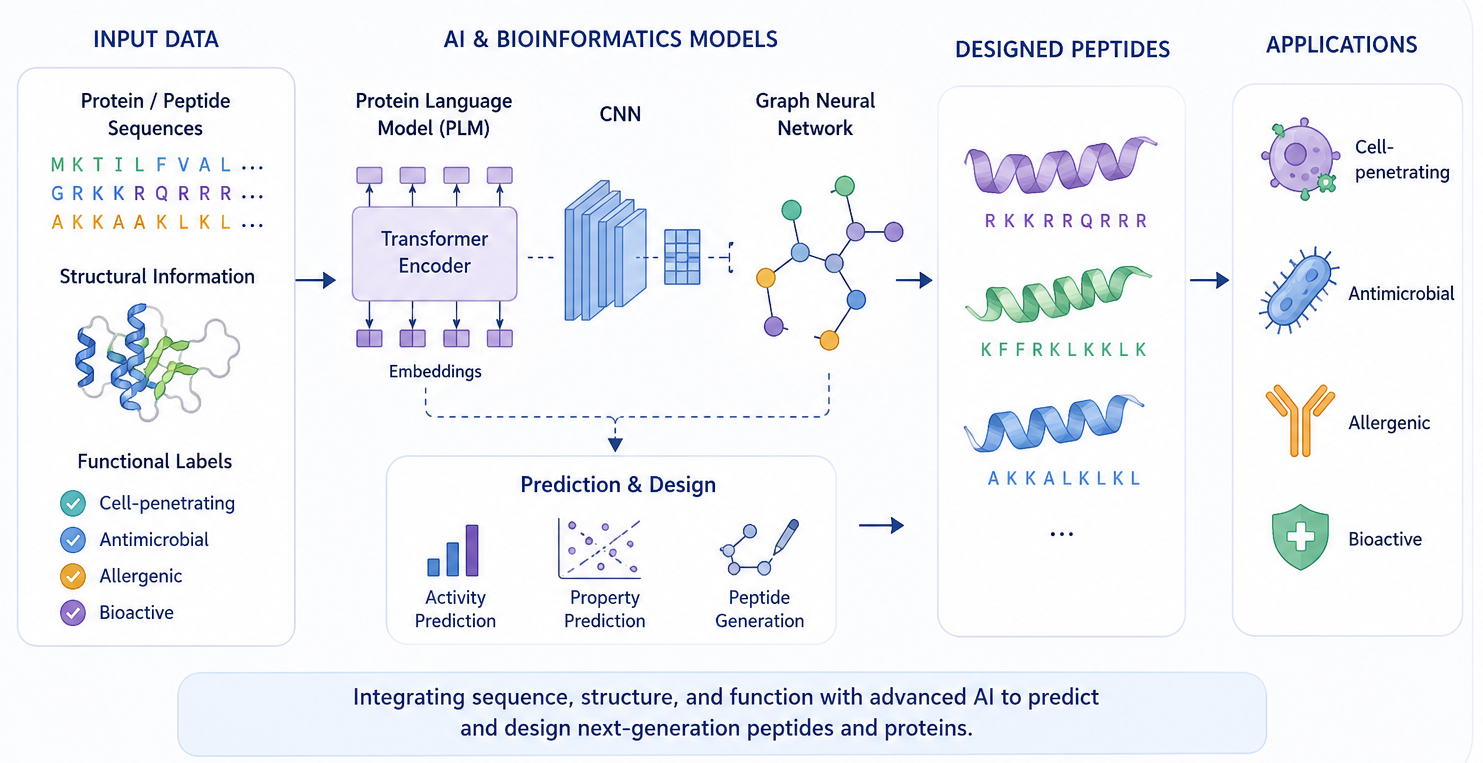
AI-guided peptide and protein design
Developing protein language model, CNN, and graph-learning frameworks for predicting and designing cell-penetrating, antimicrobial, allergenic, and bioactive peptides.
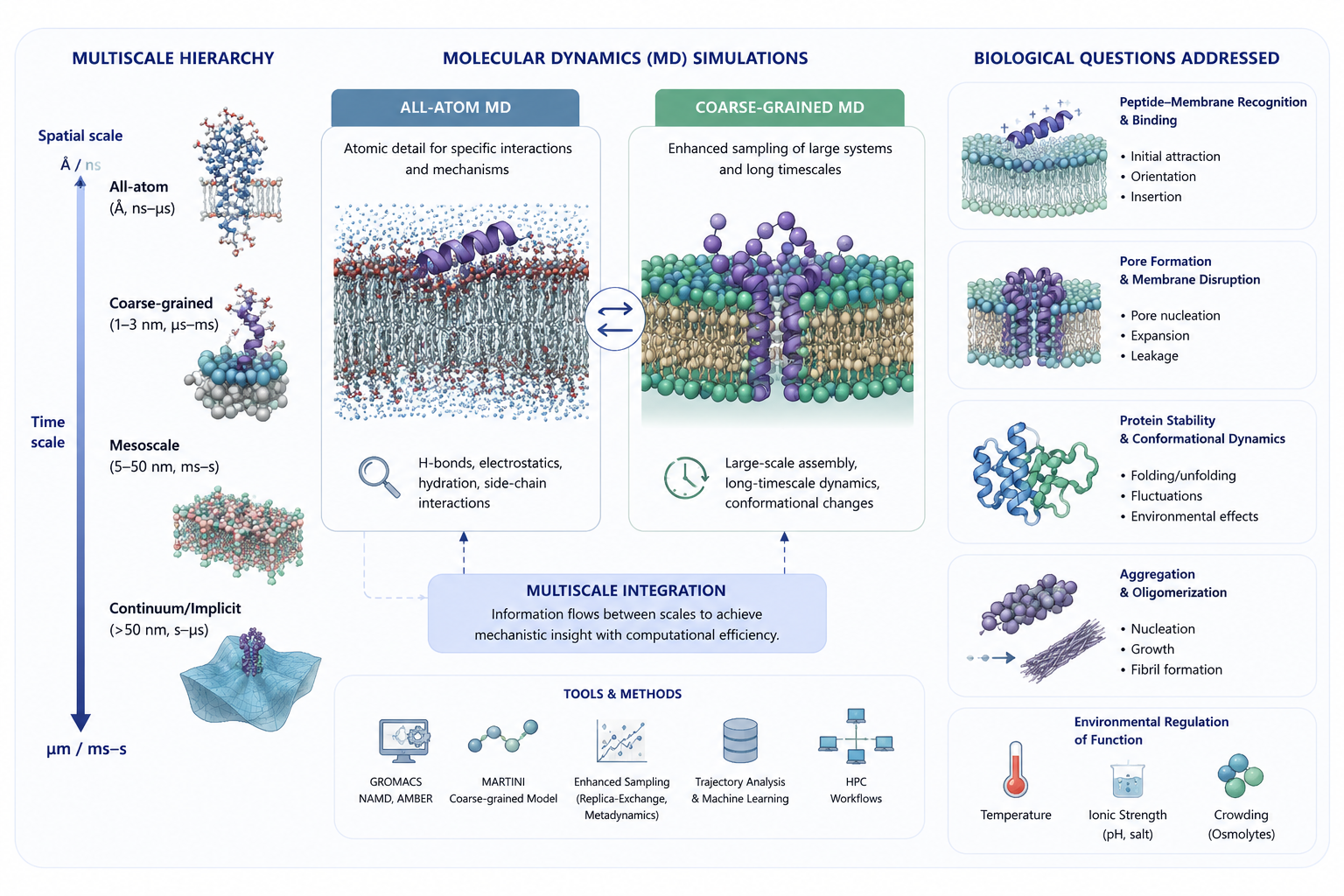
Multiscale simulation of biomolecular mechanisms
Using all-atom and coarse-grained molecular dynamics to resolve peptide–membrane recognition, pore formation, protein stability, aggregation, and environmental regulation of function.
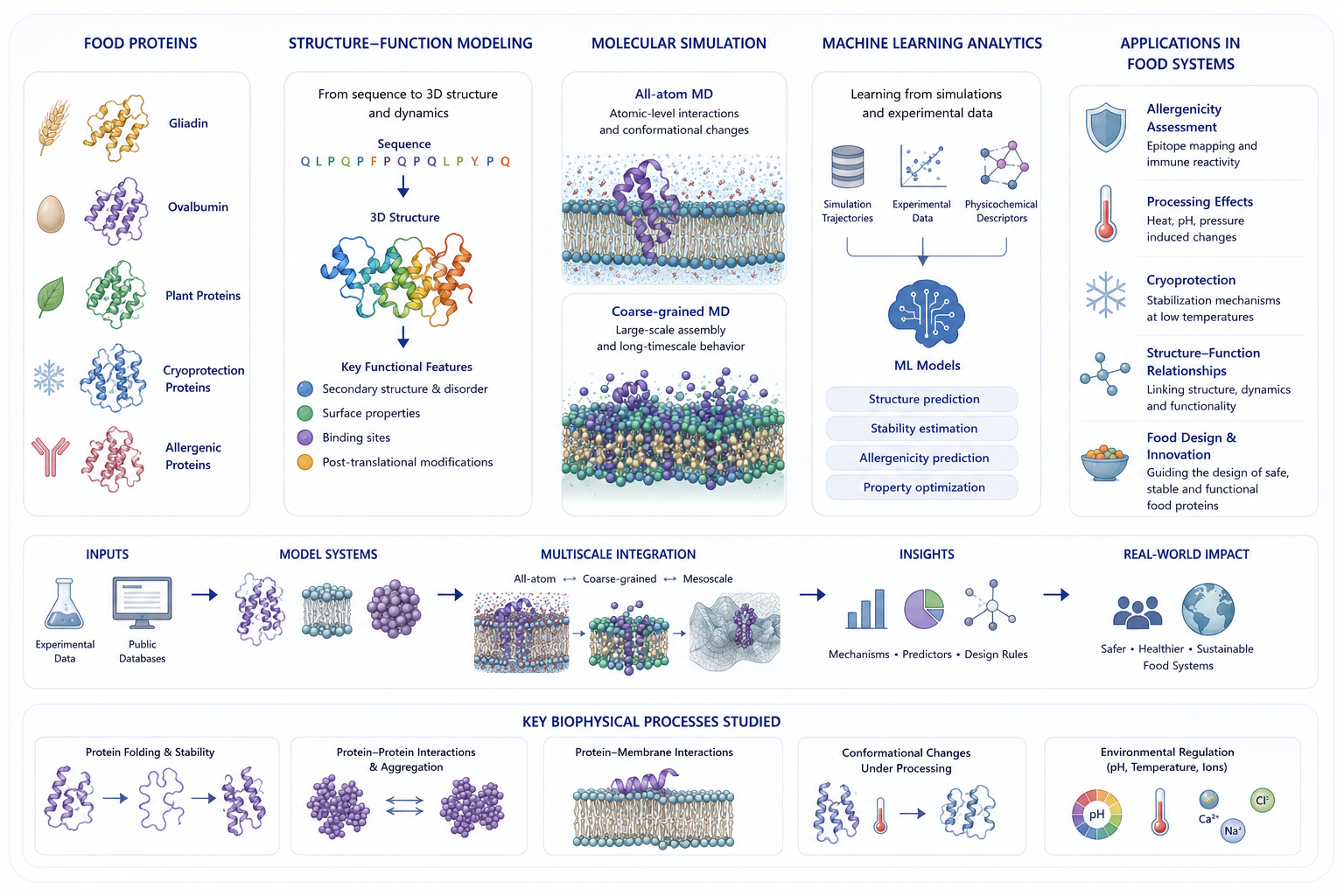
Protein structure–function modeling
Applying molecular simulation and machine learning to understand gliadin, ovalbumin, plant proteins, cryoprotection, allergenicity, and processing-induced changes in food systems.
Signature contributions
Protein language models and graph-learning frameworks
Developed pLM4CPPs and pLM4G-CPPs by integrating protein language models, graph learning, and structure-aware peptide representations. Built deployable pLM4Alg and UniDL4BioPep workflows for allergenicity and multi-bioactivity prediction.
Peptide–membrane selectivity and lipid organization
Resolved membrane-active peptide mechanisms, including Snakin-Z, and studied lipid heterogeneity in bilayer membranes.
Protein dynamics, aggregation, and environmental response
Used simulations to study gliadin behavior, protein aggregation, solvent effects, pressure response, and food protein functionality.
Non-covalent interactions and molecular recognition
Modeled cation–π, aromatic–aromatic, hydrophobic, ion–water, and related interactions governing molecular recognition.
Research vision: To build interpretable computational frameworks that connect sequence, structure, dynamics, and function, enabling mechanism-guided prediction and design of functional peptides, proteins, and biomolecular systems.
articles
chapters
Based on Google Scholar metrics updated on May 2026.
Research expertise
- Computational structural biology & biomolecular dynamics – all-atom and coarse-grained simulations of proteins, peptides, and membranes under environmental stresses such as pressure, solvent, temperature, and processing.
- Protein & peptide structure–function prediction – modeling protein–protein, protein–ligand, and protein–membrane interactions using molecular dynamics, QM/MM, and enhanced-sampling approaches.
- AI-driven bioinformatics & molecular design – developing predictive models with protein language models, CNNs, graph neural networks, and classical machine learning for functional peptides and proteins.
- Computational drug discovery & cheminformatics – virtual screening, drug repurposing, fragment-based design, and chemical-space exploration using MPDS, RDKit, and molecular modeling tools.
- Membrane biophysics & biologics design – modeling lipid heterogeneity, peptide–bilayer interactions, membrane selectivity, and pore formation to guide membrane-active molecule design.
- Protein modeling & functionality – applying simulations and AI to gliadin, ovalbumin, plant proteins, cryoprotection, allergenicity, and processing-induced structural changes.
Recent news
- 2025 Recipient of the Outstanding Post-Doctoral Research Associate Award at Kansas State University.
- 2025 Published first-author studies in J. Chem. Inf. Model., J. Phys. Chem. B, and Food Chemistry, spanning protein language models, peptide–membrane selectivity, and food protein simulations.
- 2025 Published pLM4CPPs, a protein language model-based predictor for cell-penetrating peptides.
- 2025 Published an all-atom molecular dynamics study on α-gliadin behavior in aqueous ethanol systems in Food Chemistry.
- 2024–2025 Invited talks at Cereals & Grains 2024 and the Foods2024 electronic conference.
- 2023–2025 Reviewed 30+ manuscripts for journals including Food Chemistry, International Journal of Biological Macromolecules, and several Frontiers journals.
Honors & awards
-
Outstanding Post-Doctoral Research Associate Award, Kansas State University (2025) – for innovative research, grant development, mentoring, and departmental seminar.
-
INSPIRE Fellowship, Department of Science & Technology, Government of India (2014–2019) – prestigious national fellowship supporting doctoral research in computational biology and molecular modeling.
-
Gold Medal for Academic Excellence, Central University of Bihar (2014), and invited speaker in the Sakura Science Program, Ibaraki University, Japan (2019).
Open to collaboration: I welcome collaborations in molecular simulation, peptide/protein design, AI-driven bioinformatics, membrane biophysics, protein modeling, non-covalent interaction analysis, molecular informatics, and computational drug discovery.